
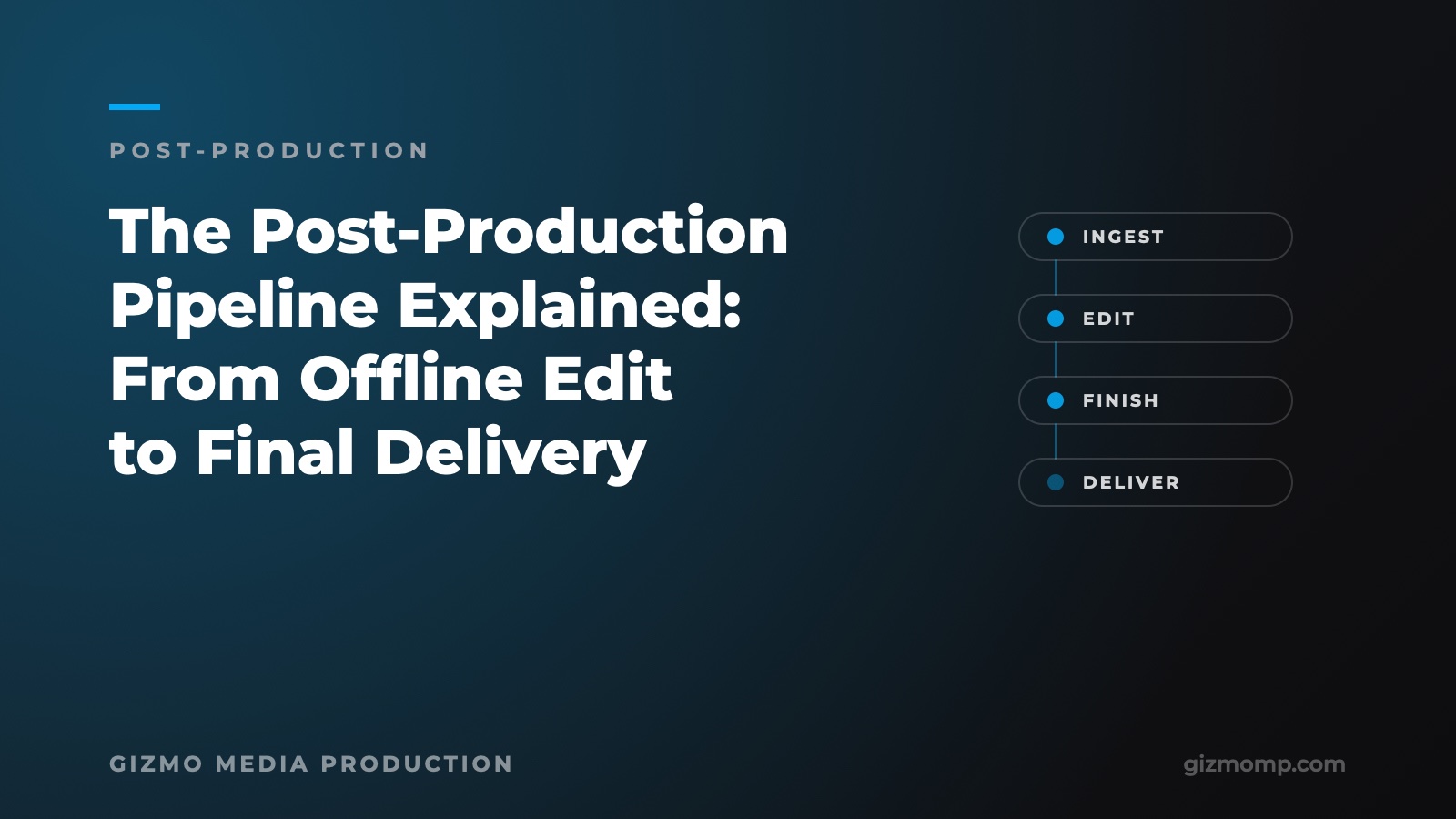
When the shoot wraps, most clients assume the hard part is over. In reality, post-production is where a pile of footage turns into a film, and it is also where timelines and budgets slip when nobody explains the order of operations. Here is how the pipeline actually runs, stage by stage, and what you will be asked to sign off on along the way.
Stage one: ingest, backup and proxies
Before anyone cuts a frame, every card from the shoot is copied to at least two drives and verified with a checksum. A single-day corporate shoot on two 4K cameras typically produces 500 GB to 1.5 TB of material, so this is not a five-minute job. Budget half a day for a clean ingest.
The camera files are then transcoded into lightweight proxies, usually ProRes Proxy or DNxHR LB. Editors cut with these smaller files so the timeline stays responsive, and the full-resolution originals are reconnected later. This step is invisible to you, but it is why a good editor can turn around a rough cut in days rather than weeks.
Stage two: the offline edit
The offline edit is where the story gets built. It usually moves through three passes. The assembly lays down every usable take in script order and is often two or three times the target length. The rough cut trims that to the intended duration with placeholder music and temporary graphics. The fine cut tightens pacing, fixes transitions and locks in the selected takes.
Your first review normally happens at rough cut. This is the moment to raise structural concerns: the wrong interview soundbite, a missing product shot, a section that runs long. For a three-minute brand film, two to three rounds of notes is normal. Each round adds one to three working days depending on scope.
Stage three: picture lock
Picture lock means the cuts, the duration and the order of shots are final. It is the single most important approval in the whole pipeline, because everything downstream depends on it. Color, sound and graphics are all timed to the locked edit.
Changing the picture after lock is possible, but it is not free. Moving one shot by two seconds can push audio out of sync, break a graphics animation and force a color pass to be redone. Ask questions before lock, not after.
Stage four: finishing in parallel
Once locked, the timeline is conformed back to the original camera files, then it branches into three workstreams that run at the same time.
- Color: a colorist balances every shot to match, then applies the look. For a three-minute film, expect one to two days.
- Sound: dialogue is cleaned, music is licensed and mixed, sound effects and foley are added, and the mix is delivered at the right loudness for each platform. One to two days.
- Motion graphics: lower thirds, titles, logo animations and any data visualization are built at final resolution. Anything from one day to two weeks depending on complexity.
Because these happen in parallel, a well-planned finish rarely takes longer than the longest single task. The main risk is late feedback on one stream forcing the others to wait.
Stage five: mastering, versioning and delivery
The master is exported as a high-quality mezzanine file, typically ProRes 422 HQ at the original frame rate, and this becomes the source for every version you need. A single film for a Dubai-based brand may leave the building as a 16:9 master, a 9:16 vertical cut for Reels and TikTok, a 1:1 square for feeds, and separate English and Arabic subtitled versions with burned-in captions.
Every version goes through quality control: sync, loudness, subtitle timing, safe margins and a full playback check on a different machine. Only then are files uploaded to a delivery link with a spec sheet so your digital team knows what each file is for.
What this means for your timeline
For a typical three-minute corporate film with two review rounds, the realistic post-production window is three to four weeks from ingest to final delivery. Rush schedules are possible, but they compress the review stage, which is where your input matters most. If a launch date is fixed, share it at the briefing stage and build the schedule backward from it.
Gizmo Media Production handles every stage of this pipeline in-house in Dubai, from ingest to multi-platform delivery, so nothing is lost in handoffs between vendors. If you have a project heading into post, or one that needs to be planned properly before the shoot, get in touch and we will map the pipeline to your deadline.
Comments are closed