
A film is no longer a single file. The same three-minute brand story now ships to YouTube, Instagram Reels, TikTok, LinkedIn, a website hero, a trade show screen and possibly a broadcast slot, and each one wants a different shape, size and format. Getting this wrong means cropped logos, muffled audio and re-exports the night before launch. Here is what the deliverables list should look like in 2026.
Aspect ratios: plan the frame before the shoot
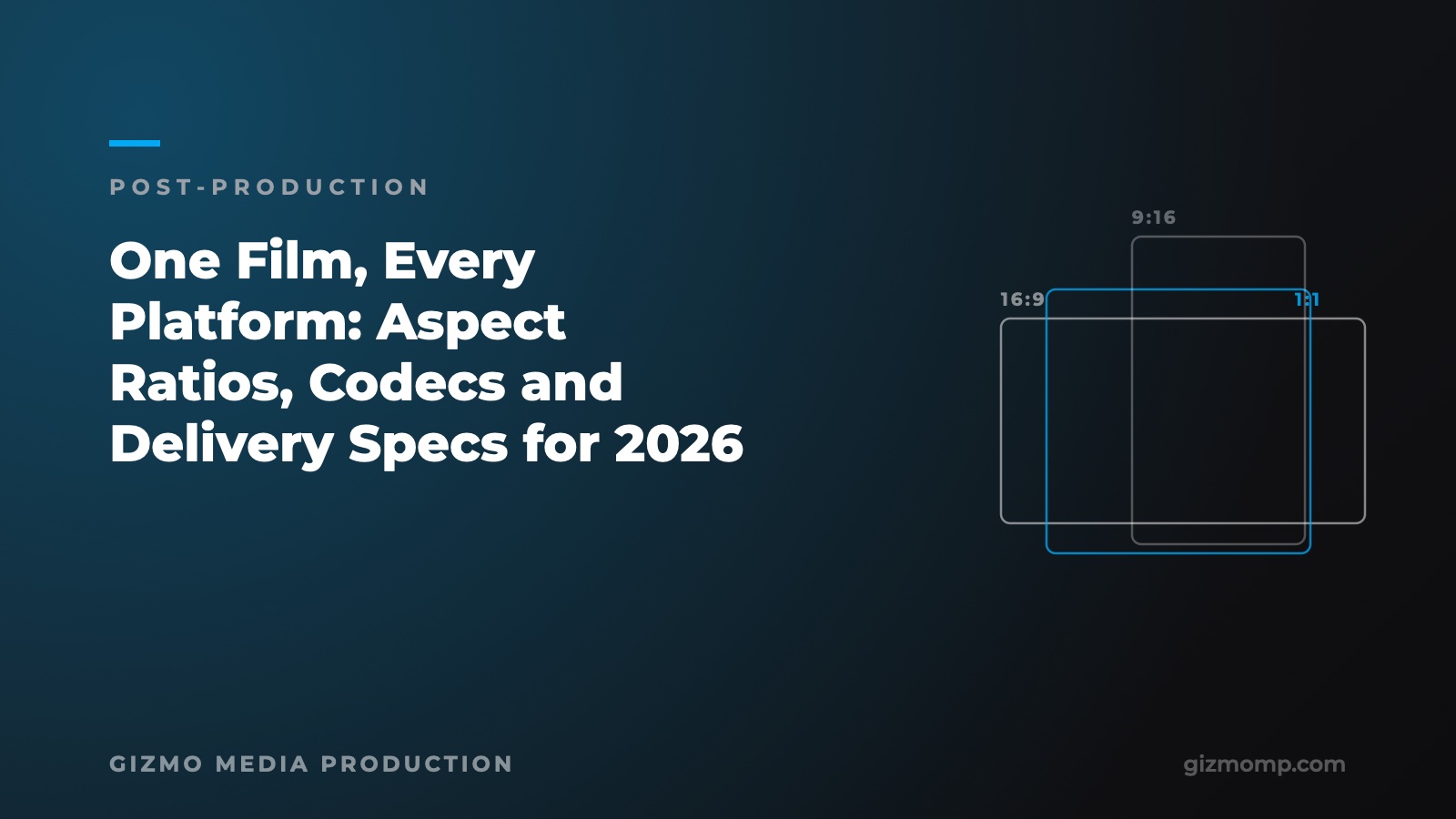
Four ratios cover almost every use case. 16:9 widescreen is the standard for YouTube, websites, presentations and television. 9:16 vertical is required for Reels, TikTok, YouTube Shorts and Stories. 1:1 square still performs well in LinkedIn and Instagram feeds. 4:5 portrait is a useful middle ground for feed posts that need more screen height than square without going full vertical.
The critical point is that vertical is not a crop of widescreen. A 16:9 frame reframed to 9:16 loses roughly two-thirds of the image. If vertical delivery is in the plan, the shoot needs to be framed for it, with subjects centered and headroom left for reframing, or shot with a second camera in portrait orientation. Decide this at the briefing stage, not in the edit.
Resolution and frame rate
Shoot in 4K (3840 by 2160) even if the primary delivery is HD. The extra resolution allows clean reframing for vertical cuts and punch-ins without softening the image. Deliver 4K to YouTube and to any large screen. Deliver 1080p to social platforms, where the upload will be compressed to that level regardless.
Frame rate should follow the content. 25 fps is the standard for broadcast and most corporate work across the UAE and the wider region. 24 fps gives a slightly more cinematic feel for brand films. 30 fps is common for content built primarily for US audiences or social feeds. Whatever you choose, keep it consistent across all versions of one film. Mixing frame rates between versions creates subtle motion judder that viewers notice without being able to name.
Codecs and bitrates by destination
There are two kinds of files: the master and the delivery encodes. The master is the high-quality source every other version is made from, and you should always receive it.
- Master: Apple ProRes 422 HQ, 4K, in the native frame rate. Roughly 700 to 900 Mbps. This is your archive and your source for future re-cuts.
- YouTube and web: H.264 or H.265 MP4, 4K at 35 to 45 Mbps or 1080p at 12 to 16 Mbps, AAC audio at 320 kbps.
- Instagram, TikTok, LinkedIn: H.264 MP4, 1080p (1080 by 1920 for vertical), 10 to 15 Mbps, within each platform’s file size and duration limits.
- Broadcast: usually XDCAM HD 50 Mbps or ProRes 422 at 1080i or 1080p 25, with audio at -23 LUFS and a station-specific slate and leader. Confirm the spec sheet with the channel before delivery.
Uploading a huge ProRes master to a social platform does not improve quality. The platform re-encodes everything, and a well-prepared H.264 at the right bitrate looks identical after upload with a fraction of the upload time.
Audio, captions and language versions
Every platform has a loudness target and most viewers on mobile start with sound off. That means two things. First, deliver a separate loudness master for broadcast at -23 LUFS and for web at -14 to -16 LUFS. Second, deliver captions. For MENA campaigns, that usually means separate English and Arabic burned-in versions for social, plus SRT sidecar files for YouTube and LinkedIn where viewers can toggle languages.
Arabic captions need a right-to-left layout and a typeface that renders correctly at phone size. Test on an actual phone, not just a desktop preview.
Safe zones and interface overlap
Vertical platforms cover parts of the frame with interface elements: the caption, the username, the like and share buttons, the progress bar. Keep titles, logos and essential action inside the central 80 percent of the frame horizontally and away from the bottom 20 percent vertically. A logo placed in the corner of a 16:9 frame will vanish behind a button in 9:16.
The deliverables list, in one place
For a typical multi-platform brand film, expect to receive a ProRes master, 4K and 1080p H.264 files for web, vertical, square and portrait social cuts, English and Arabic subtitled versions of each, SRT files, and a broadcast master if required. That can be 15 to 20 files. A spec sheet listing what each file is for makes your digital team’s life much easier.
Gizmo Media Production plans delivery specs at the briefing stage and builds every version from a single mastered timeline, so your film looks and sounds consistent on every screen it reaches. If you are planning a campaign that needs to live on more than one platform, get in touch and we will put the deliverables list together with you.
Comments are closed